TRACE MY HOUSE
  • Welcome
  • The House
    • Land Registry and Title deeds
    • Maps
    • Tax
    • Manorial Records
    • Other Records
    • Postcards & Photos
    • Enclosures
    • Books & House Histories
    • Church & Parish Records
  • The People
    • Census
    • 1939 Register
    • Directories
    • Valuation Survey
    • Probate & Wills
    • Land Tax
    • Rate Books
    • Newspapers
    • Electoral Rolls and Poll Books
    • Civil Registration
    • Fire Insurance Records
    • Inquisitions PM
    • Private Estate Records
    • National Farm Survey
    • Court Records
    • Telephone Books
  • The Stories
    • House Stories
    • House Museums
    • Homes of Famous People
    • UK House History Guides
    • Virtual house tours
    • Architectural Terms
  • Blog
  • Trace my American Home
    • Trace my American House more help
    • How Old is my American House
    • Visit American Homes
    • American House History Guides

house  stories

Here we present a few sample histories of houses we have traced.

Sudbury.......

Edwardian red brick and partial partial painted  pebbledash semi detached house in Sussex with an interesting history
Sudbury is an Edwardian house built around 1900 in a rural Sussex town. Using conveyance, probate, mortgage documents, and local sources, it has been possible to reconstruct the history of the property and its occupants, providing insight into life in the town over the 20th century. The first recorded resident was the headmaster of the local Blue Coat School, who lived at Sudbury when the school relocated from London.
Subsequent occupants included a family of insurance clerks who lived at the house for fifty years, maintaining the property and contributing to the local community. At other times, the house was home to a pair of independent women who devoted their time to the church and civic life, reflecting the social roles of women in the area.
Throughout its history, Sudbury has remained a private residence while retaining much of its Edwardian character. The combined documentary sources—conveyances, probate records, mortgages, and local archives—provide a detailed record of the house’s ownership, occupancy, and role within the town’s social fabric.
Sudbury is an Edwardian house built around 1900 in a rural Sussex town. Using conveyance, probate, mortgage documents, and local sources, it has been possible to reconstruct the history of the property and its occupants, providing insight into life in the town over the 20th century. The first recorded resident was the headmaster of the local Blue Coat School, who lived at Sudbury when the school relocated from London.
Subsequent occupants included a family of insurance clerks who lived at the house for fifty years, maintaining the property and contributing to the local community. At other times, the house was home to a pair of independent women who devoted their time to the church and civic life, reflecting the social roles of women in the area.
Throughout its history, Sudbury has remained a private residence while retaining much of its Edwardian character. The combined documentary sources—conveyances, probate records, mortgages, and local archives—provide a detailed record of the house’s ownership, occupancy, and role within the town’s social fabric.

Brandon.......

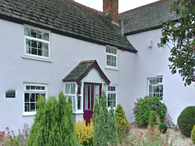
White faced cottage in Devon village which was once a shop and post office
Brandon is a cottage located in a small village in the Blackdown Hills of Devon. Researching its early history proved challenging, as most of the original title deeds were missing and the property, built on Glebe land, did not appear on the tithe maps. Despite these gaps, it was possible to trace the house’s ownership and occupancy over more than a century. One local family owned Brandon from 1851 into the 1930s, and subsequent occupants have been documented up to the present day.
The cottage also served a variety of commercial purposes over time. It was once a draper’s shop, general store, and post office, and in later years operated as a petrol station. Local residents recalled the shop and post office, providing additional personal context to the property’s social history.
Historical sources—including the local history library, newspapers, census records, rate books, directories, poll books, telephone books, tithe returns, probate records, valuation surveys, land tax documents, civil registration, private estate records, the 1939 Register, and fire insurance records—have been used to reconstruct Brandon’s development, ownership, and role within the community.


Hedley.........

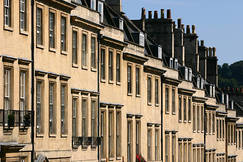
Terrace of Georgian houses in Bath
Hedley Villa, in Bath, has a complex history complicated by changes to both the house name and the street on which it stands. The current owner could not access any original conveyancing papers, but research using local libraries, directories, census records, and the local record office allowed the house’s history to be reconstructed.Built of golden Bath stone, the house was originally constructed by a local soap manufacturer whose nearby factory provided the family’s wealth. He and his wife raised eight daughters, all of whom attended private schools, enjoying a comfortable and privileged childhood. During the Second World War, a neighbouring house was bombed, and Hedley Villa suffered some damage, which required repairs. A small extension was added at around this time, likely as part of the wartime restoration.
Subsequent occupants have included a local author of history books and a stockbroker, reflecting the continued professional and middle-class status of the house. Historical sources—including the local history library, newspapers, census returns, rate books, directories, poll books, telephone books, tithe returns, probate records, valuation surveys, land tax documents, civil registration, parish registers, overseers’ accounts, the 1939 Register, and fire insurance records—have been used to trace the ownership, occupancy, and development of Hedley Villa.


Twistgates.......

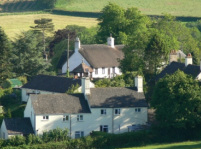
View of Sussex village with houses that have interesting history
The owners of Twistgates had long suspected their large house had once been much smaller. Research revealed a fascinating story of growth and adaptation: planning applications at the local town hall and record office showed how successive extensions met the changing needs of its residents. Among them was Eleanor March, a spirited widow in the 1920s who transformed part of the house into a vibrant garden studio, hosting local artists and writers. Census records, title deeds, trade directories, Tithe, land tax records and local history books helped piece together the lives of those who lived there, tracing Twistgates’ evolution from a modest home into the substantial house it is today.


Picture
Cliffwood is a Shingle Style house built around 1892 in Newport, Rhode Island. The rambling, asymmetrical home features wood-shingled walls and roofs, intersecting gables, a front-facing tower, and a wide porch supported by stone columns. Windows include double-hung units with multipane upper sashes and grouped openings.
The first owner was Samuel H. Winslow, a retired shipping merchant, who lived here with his wife and five children; the 1900 census also records a cook and a housemaid. His youngest son, Henry Winslow, became a naval officer and later commanded a merchant vessel involved in a notorious shipping scandal, which caused great public controversy along the Newport coast. In 1920 the property was sold to Margaret and Edward Loring, a banker with a private investment firm, who added a rear wing and enclosed part of the porch. During the Second World War, part of the property was rented to boarders.
In 1975 the house passed to Eleanor and James Whitfield, who restored the original shingles and porch columns. More recent owners have maintained the Shingle Style features while adapting the interior for modern use. The house’s history has been traced through deeds, census records, city directories, newspapers, and historic maps, documenting its architecture, ownership, and social history over more than a century.

Ruth Cottage.....

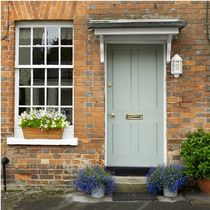
Georgian style  cottage with front door with porch
The Sussex House was originally built in 1870 as a nurseryman’s cottage in the heart of the county but has since been enlarged into a substantial family home. Research uncovered the sequence of occupants, the evolution of the property, and old photographs of both the house and the surrounding road.
Among its residents, the most notable was a poet and critic who translated Kafka’s early work, who lived in the house during the 1930s. Biographical sources provide insight into his life there, offering glimpses of the domestic environment and daily routines. Other occupants, while less famous, included a tailor, an engineer, and an army captain, all of whom shared the everyday experiences and challenges of family life in the cottage.
Over time, the house underwent several alterations, including additions to the roof and side extensions, transforming it far beyond its original nurseryman’s design into a comfortable and flexible family home.
Historical sources—including the local history library, census records, rate books, directories, poll books, tithe returns, valuation surveys, land tax records, civil registration, court records, private estate archives, and the 1939 Register—have been used to document the house’s architectural development, ownership, and social history.


Firenze.....

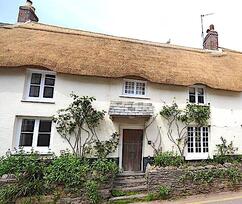
Thatched cottage in Devon with interesting history
Firenze was built in 1792 by a family returning from travels abroad, who settled on 20 acres of seaside Devon. The partially cob construction combined a variety of European architectural styles, making it a distinctive and unusual residence. Over the years, the house has had a remarkable succession of occupants, reflecting a rich social history.
Several seafarers lived at Firenze, likely sharing stories of far-off ports and adventures around its fireplace. It was also home to a number of clerics who held livings in surrounding villages, though not all were regular churchgoers. The house was extended on several occasions, and a fire in the roof in 1932 required the replacement of the thatching.
Historical sources—including the local history library, newspapers, census records, rate books, directories, poll books, tithe returns, probate records, valuation surveys, land tax records, parish registers, overseers’ accounts, court records, private estate records, and fire insurance documents—have been used to trace the architectural evolution, ownership, and occupancy of this notable Devon residence.

Picture
​Oak Hill is a Greek Revival house built around 1845 in Albemarle County, Virginia. The building has a symmetrical façade, low-pitched gabled roof, bold cornice, and a columned front portico.
The first owner was Thomas P. Whitlow, a lawyer, who lived here with his wife and four children; the 1850 census also records three enslaved people. After the Civil War, the property was sold in the 1870s to James and Eliza Carter. James Carter was a textile industrialist who later became infamous for his involvement in a high-profile labor strike. The Carters added a rear wing and modernised parts of the interior.
By the early 20th century the house was occupied by the Fletcher family, who installed electricity and plumbing. During the Second World War, part of the property was rented to boarders. In the 1960s, Dr. Harold Benson restored the house, including the portico. Oak Hill today retains its Greek Revival features. Its history has been traced through deeds, census records, probate inventories, newspapers, and maps


Number 48...

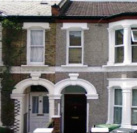
Semi detached Edwardian House in London suburb
No. 48 is a terraced villa situated on a typical London street, and its history reflects the development of the surrounding suburb over the past 150 years. The house was built by a Scottish teetotaller who insisted that no public houses or off-licenses be established on the estate and actively enforced this principle.
The property was never occupied by the wealthy or famous, but its residents illustrate the social fabric of the area. Occupants have included a lady who played the organ in the local Baptist church, a travelling salesman, a carpenter, and a soldier who served in both World Wars. Each contributed to the everyday story of suburban life, making the history of No. 48 notable in its ordinariness.
Historical sources—including newspapers, census returns, rate books, directories, poll books, telephone books, probate records, valuation surveys, civil registration, and the 1939 Register—have been used to trace the ownership, occupation, and social history of the house.


Pantiles......

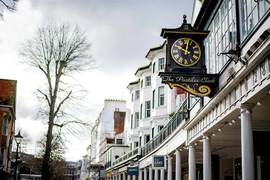
Row of Regency  shops  with apartments over in Tunbridge Wells, Kent
The Georgian House in the centre of a Spa town was originally built to accommodate visitors and has undergone a number of alterations; it now functions as a shop with a flat above. During research, a remarkable discovery was made: hidden deep within a chimney breast was a glass bottle containing a letter dated 1874, an old newspaper, coins, and shop labels, all carefully wrapped.
Using directories, census records, and local archives, the contents were linked to a chemist who had lived in the house for many years. The letter described his family, including nine children, two of whom had died of whooping cough, and mentioned practical matters such as having the kitchen floor re-laid to prevent water ingress. The capsule also contained twelve copper coins worth sixpence, an estate agent’s catalogue showing homes available to buy or rent at the time, stamps, and labels from his chemist shop. The letter concluded with a note that rose oil had been sprinkled on the parchment, and remarkably, the scent was still detectable 120 years later.
Historical sources—including the local history library, newspapers, census returns, rate books, directories, poll books, telephone books, tithe returns, probate records, valuation surveys, land tax documents, civil registration, parish registers, overseers’ accounts, the 1939 Register, and fire insurance records—have been used to reconstruct the house’s architecture, occupancy, and social history.

Picture
Romano House 
This Dutch Colonial Revival house was built around 1912 in White Plains, Westchester County, New York, at a time when the area was expanding as a commuter suburb. The house has a gambrel roof with flared eaves, a continuous front dormer, shingle cladding, and a symmetrical façade with 8-over-8 sash windows and a Dutch door.
The first owner was Charles H. Miller, a stockbroker, who lived here with his wife and three children. The 1920 census shows the household also included a live-in maid. The Millers sold the property in the mid-1930s, most likely due to financial setbacks during the Depression. It was then bought by the Romano family, who ran a grocery business. They added a garage in the 1940s and rented out a bedroom during the war years.
In 1958 the house was sold to the Edwards family, who updated the kitchen and enclosed part of the porch. They lived here through the 1960s and 70s, when the house was regarded as a solid and traditional suburban home. Later owners carried out restoration work, reinstating original sash windows and a Dutch door.
The history of the house has been traced using deeds, census returns, directories, local newspapers, and Sanborn fire insurance maps. These sources provide evidence of the house’s construction, its changing ownership, and the ways in which it has been adapted over more than a century.
​The picture shown is not the original Romano Hopuse but a simialr photo

Picture
Riversdale is a property in an East Sussex town with a history spanning more than a century. Originally part of a mid-19th-century rural estate, the land was redeveloped following the arrival of the railway in 1868, which helped the area grow as a health resort. By the early 20th century, the property had been purchased and built as a substantial residence by a local builder. Early occupants included families with domestic staff, reflecting the social hierarchies of the period, and later independent women who ran the house as a lodging for affluent female residents.
Over the following decades, Riversdale was home to gentry, military families, commercial artists, and professionals. The property underwent alterations to meet changing domestic and social needs. By the 21st century, it continued to function as a private residence while retaining elements of its historic character.
This history has been compiled from deeds, indentures, newspapers, census records, maps, directories, and other contemporary sources.

Picture
Malling Place is a Georgian residence built before 1732, refronted in that year, with later internal alterations. The house retains classical proportions and notable features, including a half-oval staircase and a curved internal door. The five-bay red brick façade includes timber sash and French casement windows, a central half-glazed entrance, and a hipped clay-tiled roof, with later extensions to the rear.
In the mid-20th century, the property was subdivided, creating Little Malling. Occupants over time have included the Golding family, a former plantation owner, military officers, stockbrokers, and private owners. Historical sources—including directories, censuses, newspapers, probate records, and planning documents—document its architectural development, ownership, and occupation, reflecting both its Georgian design and social history.

Go to top of page                                                                              @ tracemyhouse 2017

The House

Land Registry
Maps
Manorial Records
Other Records
Postcards & Photos
Enclosures
Books & House histories
​Church & Parish Records

The People

Census
1939 Register
Directories
Valuation Survey
Probate & Wills
Land Tax
Rate Books
Newspapers
Electoral Rolls & Poll Books
Civil Registration
Fire Insurance Records
Inquisitions PM
Private Estate Records
National Farm Survey 
Court Records
Telephone Books

Our Library

House Stories
House Museums
Home of Famous People
UK House History Guides

Virtual House Tours

Other Resources

Record Offices 
​Writing it all up 
​Talking to Neighbours
​Downloads
​
Census checklist 
Timeline 
​Blog
​Privacy Policy
Terms of Reference.

American Houses

Trace My American House
​Interesting American Houses
​
More help & advice 
​American House Guides
​Date Your house
House Styles 
​Colonial
​​Romantic 
​Victorian
​Colonial Revival  
Spanish Colonial
Arts & Crafts  
Architectural Terms Used 
HOME 
 ©This site is designed, published & copyright of and by The Comminhandy Group of Websites
 ALL RIGHTS RESERVED.

We welcome feedback so if you have any comments, questions or queries email us on here
OUR ADVERTISING POLICY - This website receives no funding or any other form of award and is run voluntarily to provide information to those who want to trace the history of their house. We would like to say thank you to all those who have or will in future click on the advertisements they find on this page. We know they can be a nuisance  or distraction and we try to make sure that they are relevant to the information we provide and our readers. However the modest income we receive from them keep the web site going. So thank you.
  • Welcome
  • The House
    • Land Registry and Title deeds
    • Maps
    • Tax
    • Manorial Records
    • Other Records
    • Postcards & Photos
    • Enclosures
    • Books & House Histories
    • Church & Parish Records
  • The People
    • Census
    • 1939 Register
    • Directories
    • Valuation Survey
    • Probate & Wills
    • Land Tax
    • Rate Books
    • Newspapers
    • Electoral Rolls and Poll Books
    • Civil Registration
    • Fire Insurance Records
    • Inquisitions PM
    • Private Estate Records
    • National Farm Survey
    • Court Records
    • Telephone Books
  • The Stories
    • House Stories
    • House Museums
    • Homes of Famous People
    • UK House History Guides
    • Virtual house tours
    • Architectural Terms
  • Blog
  • Trace my American Home
    • Trace my American House more help
    • How Old is my American House
    • Visit American Homes
    • American House History Guides